A masia wedding takes place in a traditional Catalan farmhouse: thick stone walls, a courtyard, fields around it and, in most cases, room for the whole day in one place. Many couples choose a masia for its calm and its space, and many need help with the practical side: distance, beds, rain and noise. This guide explains what a masia is, how to plan a wedding in one and what to ask, and links the masia venues in our Directory.
What is a masia?
A masia is the traditional Catalan farmhouse. The Gran Enciclopèdia Catalana defines the mas as a traditional farm organised around a house built for that farm. It describes it as a type that appeared in the early Middle Ages in eastern Catalonia, and says the word was used from the 12th century for the land of the farm and its fields. In some regions the larger ones are called masies. In Spanish the word is masía, and in French couples often say mas.
The Enciclopèdia Catalana also explains how the building changed. In the 13th to 15th centuries, defensive tower houses stood next to simpler houses with a two-sided roof. The classic type, with a ground floor for the animals, the family living above and a granary under the roof, was consolidated at the end of the Gothic period, and the article gives the 16th century as the point when the type was settled. In the 16th and 17th centuries piracy and banditry led to the fortification of some masias, and a farm usually had a threshing floor, outbuildings and its own source of water. These are the elements that today become your ceremony space, your party room and your portraits.
Venues today keep these parts. The old threshing floor is the ceremony space at Les Cols and Mas Campassol. The old dairy of La Vaqueria de Mas Garriga is now the banquet space. The old wine cellars of Mas La Boella hold a banquet room, and the tower of Can Ribas de Montbui is the backdrop for civil ceremonies.
Why couples choose a masia wedding
- The whole day in one place. Ceremony, drinks, dinner and party often happen on the same estate, so guests do not travel between them.
- Space for everyone. Lawns and courtyards suit children, older guests and a long guest list. Some masias have ramps and adapted bathrooms for guests with reduced mobility.
- Privacy. Masia Can Tosca and Masia Mas Badó hold one event per day, and Mas de Sant Lleí gives each wedding the use of the whole estate.
- Rooms on site. Mas Palau has rooms for 26 people and Mas Campassol sleeps up to 20, so the group stays together and the morning is easy.
- Little decoration. Stone, beams and old trees do most of the work. A few flowers are enough.
The same strengths can be limits. A masia in the countryside is usually far from a train station, may have a narrow road, and sometimes has a fixed closing time for the party. Plan for that from the start.
Masia venues in the Directory
These are the masias and farmhouse estates we list, with one fact from each venue’s own website. Click through for the full page.
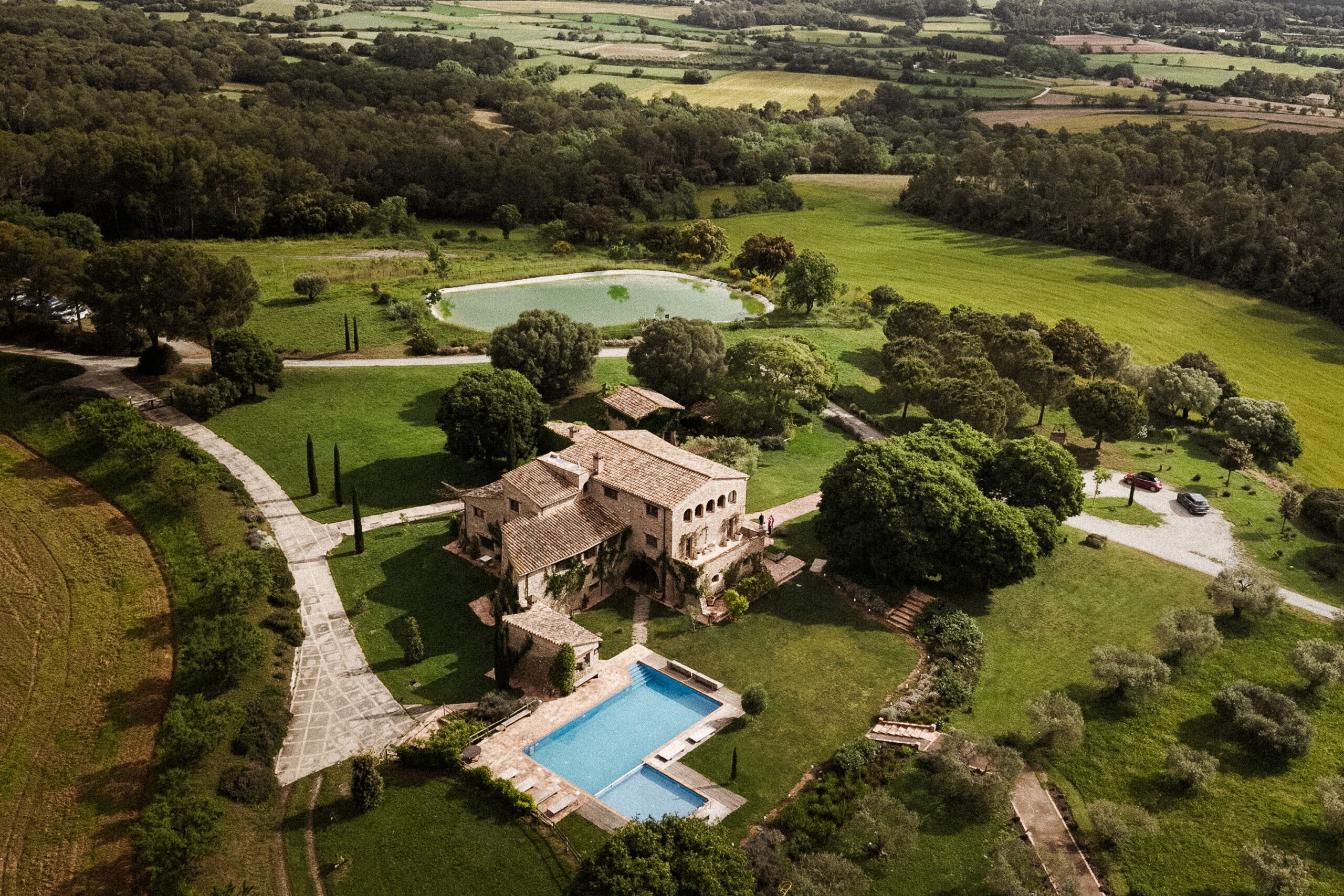
- Mas Palau, Blanes: a masia from 1670, five minutes from the beach, with rooms for 26 people.
- La Vaqueria de Mas Garriga, Sant Andreu Salou: documented since the 15th century, with an old dairy now used for banquets.
- Les Cols, Olot: a 15th-century masia in the Garrotxa volcanoes, with a ceremony on the threshing floor.
- Mas Campassol, Sant Feliu de Pallerols: a 12th-century masia at 613 metres, for weddings of up to 60 guests.
- Mas de Torrent, Torrent: a restored 18th-century masia and hotel in the Empordà.
- Martín Faixó – Sa Perafita, Cadaqués: a 14th-century stone farmhouse among vineyards.
- Mas Marroch, Girona: a rustic masia that is a project of the Roca brothers.
- Masia Montcorp, Montseny: a renovated historic house with a brick tower and a 12th-century hermitage.
- Can Ribas de Montbui, Bigues i Riells: a 16th-century masia with glass-walled halls for up to 300.
- Mas de Sant Lleí, Vilanova del Vallès: more than 40 hectares, with a history that starts in 1129.
- Masia Mas Badó, Sant Quirze Safaja: 75 hectares, its own church and one wedding per day.
- Masia Can Tosca, Cabrils: gardens in the Maresme and one event per day.
- Mas Sadurní, Begues: a masia among vineyards, with a ceremony possible among the vines.
- Mas Passamaner, La Selva del Camp: a modernist masia from 1922, now a boutique hotel.
- Masia Cabellut, Catalonia: a secluded villa in the hills, with vineyards and panoramic views, for intimate weddings.
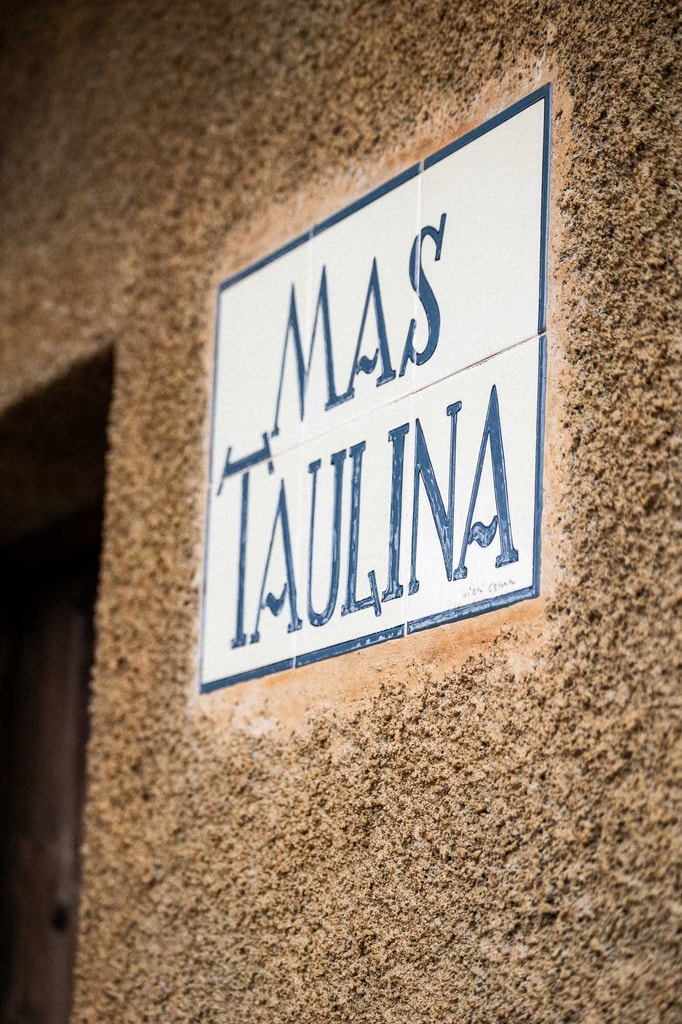
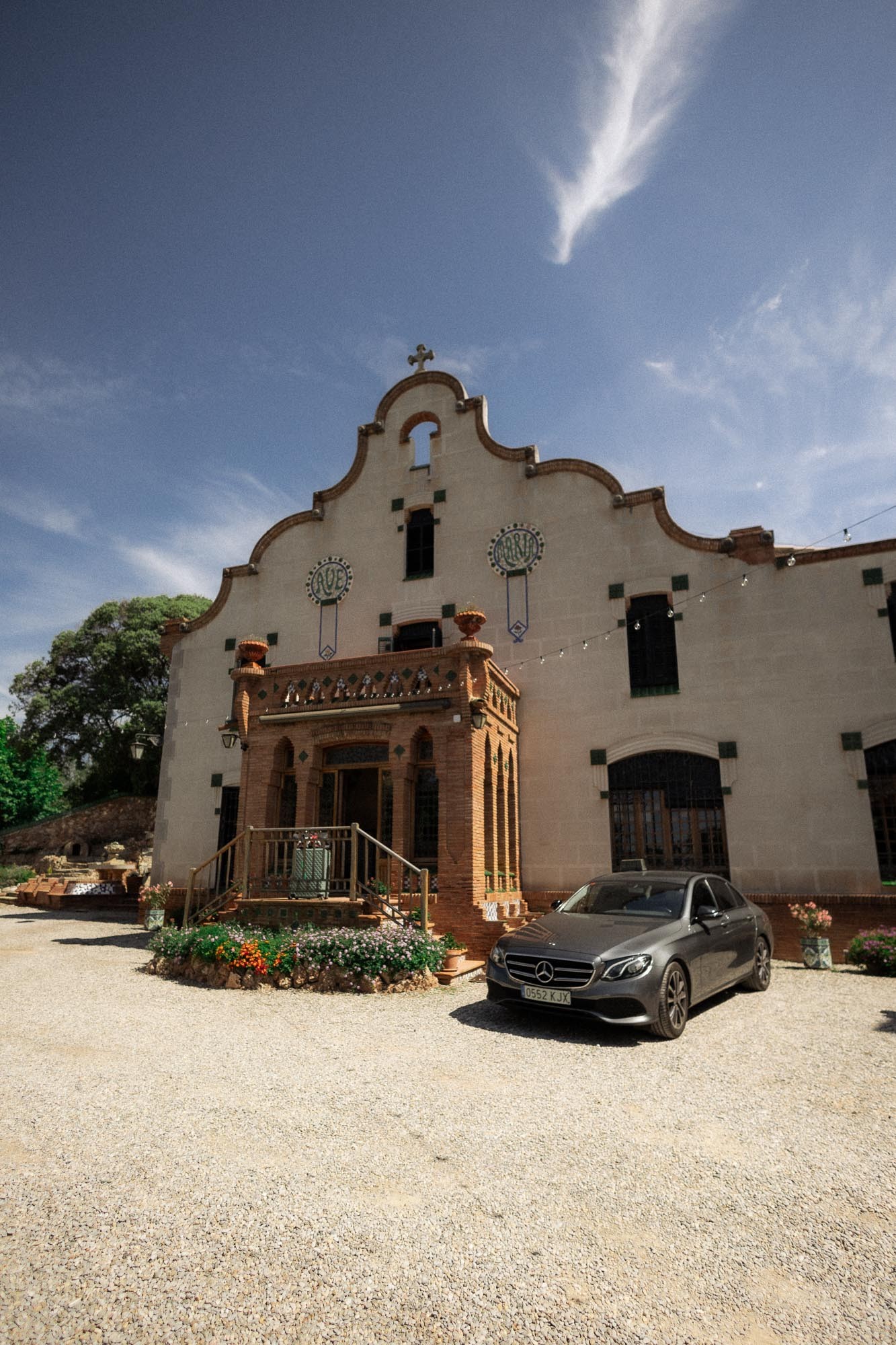
The venue is not always a pure farmhouse. Can Borrell in Castellar del Vallès is a modernist estate, designed by a disciple of Gaudí on 180 hectares. We include it here because its brick arches, terraces and large grounds work like a masia wedding, with the day in one place.
Planning a masia wedding: the practical points
Distance and getting there
Masias are in the countryside, so check the drive from the airport and from the town where guests sleep. Mas de Sant Lleí is about 15 minutes from Barcelona and Can Ribas de Montbui about 40, while Mas Campassol is 75 minutes away. Can Ribas de Montbui tells guests without a car to take the train to Mollet-Sant Fost and a taxi. Ask each venue about the last stretch of road too: Masia Casa del Mar, for example, says its last 150 metres are an unpaved track.
Where guests sleep
Beds are the limit of many masias. Mas Palau has rooms for 26 people, La Vaqueria for 22 and Mas Campassol sleeps up to 20, while Mas de Sant Lleí points to three hotels five minutes away. Decide early who sleeps on site: usually the couple, their parents and the people who help.
Rain plan
Masia ceremonies are mostly outdoors, so every venue needs an answer to rain. Mas de Sant Lleí has a sheltered space with umbrellas, Can Ribas de Montbui uses a decorated tent and Masia Can Tosca uses an indoor hall. At Les Cols the website covers the aperitif and meal, not the ceremony, so the question there is where the ceremony would move. Ask to see the rain space with the chairs in place, and check its daylight.
Noise and time limits
Rules on noise and closing hours depend on the venue and on the municipality, and they change. In general, countryside venues are farther from neighbours than city venues, but many still set a time for the music to end. Ask for the closing time, whether it is the same every day of the week and what is allowed outdoors after it. Then build the timeline around the answer.
Outside suppliers
Policies differ a lot. Castell Torre Cellers and Masia Can Tosca work with outside suppliers or caterers. At Les Cols, Mas de Torrent and Mas de Sant Lleí the venue’s own kitchen cooks the meal, and Mas de Sant Lleí lets you bring your own wedding planner. Confirm in writing what you can bring, including your photographer.
Photographing a masia: courtyards, stone and window light
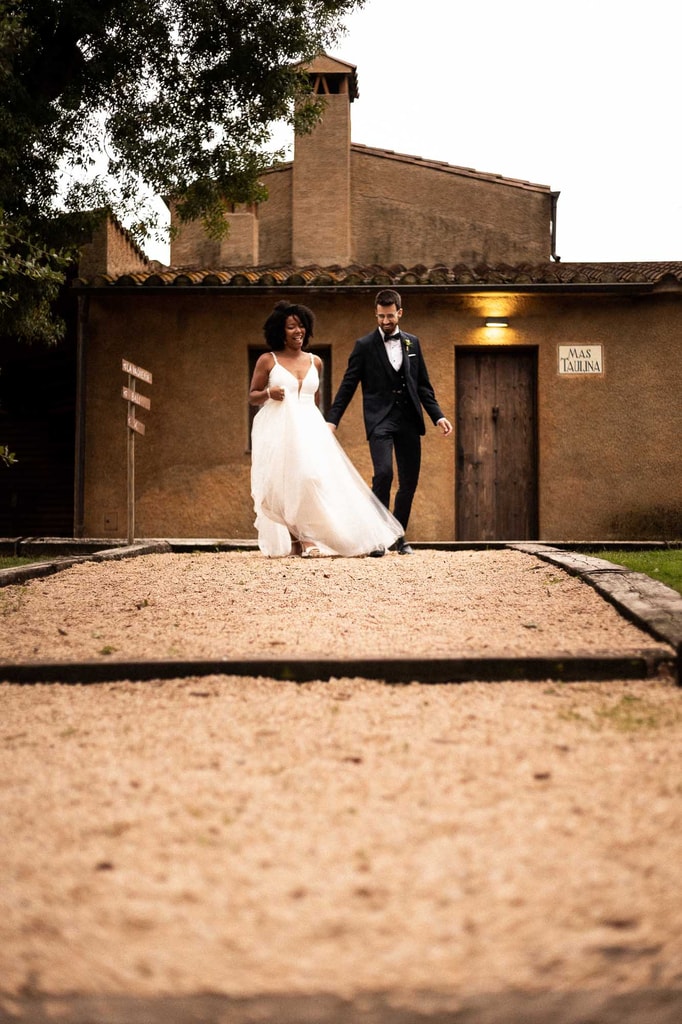
A masia is a good place to photograph because the building has depth: thick walls, arches, doorways and a lot of texture. Our general advice, from working on masia weddings, is to treat the day in three kinds of light. Outside, stone and plaster reflect sunlight, so we prefer the courtyard in the shade of late afternoon. Inside, the windows are often small and deep, which gives soft side light for getting ready. At night, string lights and the warm tones of old walls need no extra decoration.
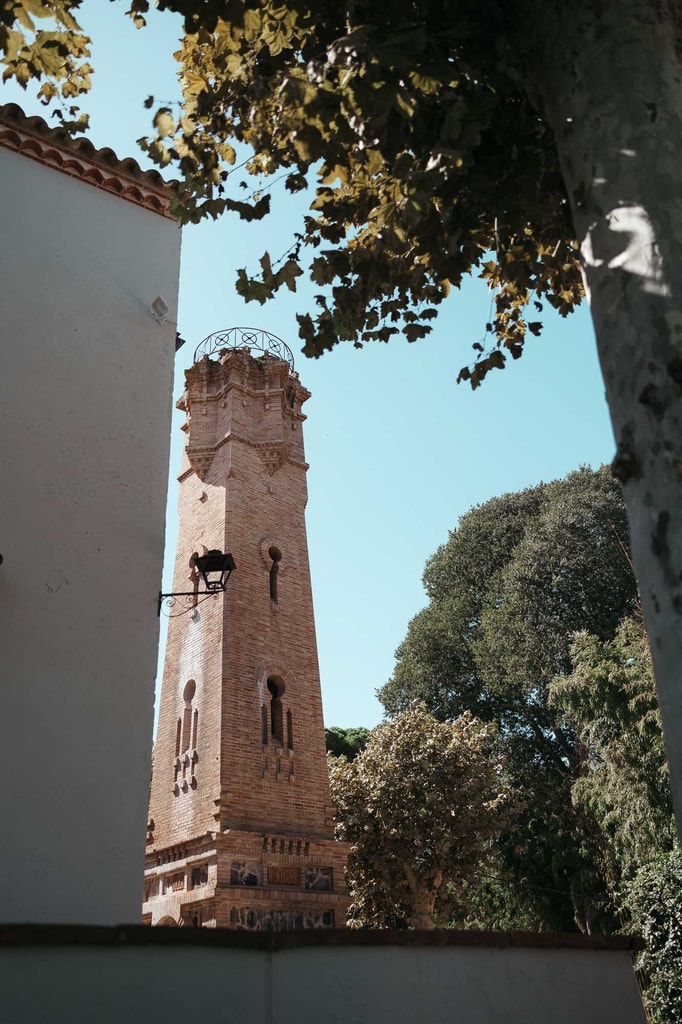
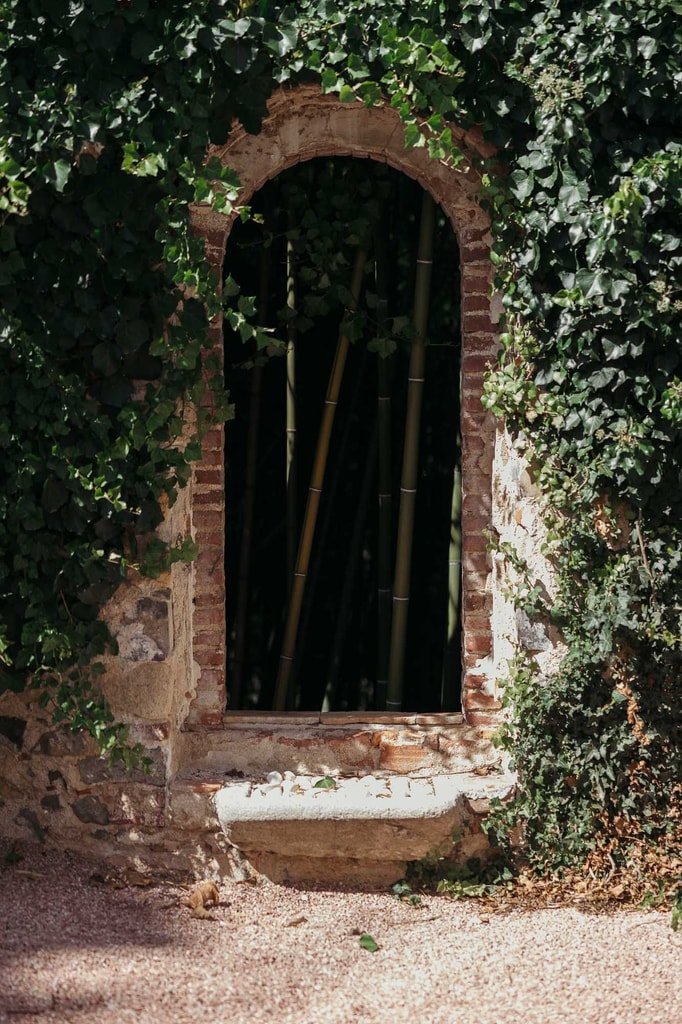
For the ceremony, ask where the sun is at the hour you choose. Stone walls behind the couple give a clean background, but a lawn in full sun is hard on faces. For portraits, set aside 30 to 45 minutes and walk the estate beforehand with the venue’s coordinator, because large properties offer more places than you can use. For the dress and the rings, an old doorway with a window beside it gives soft light that needs no flash.
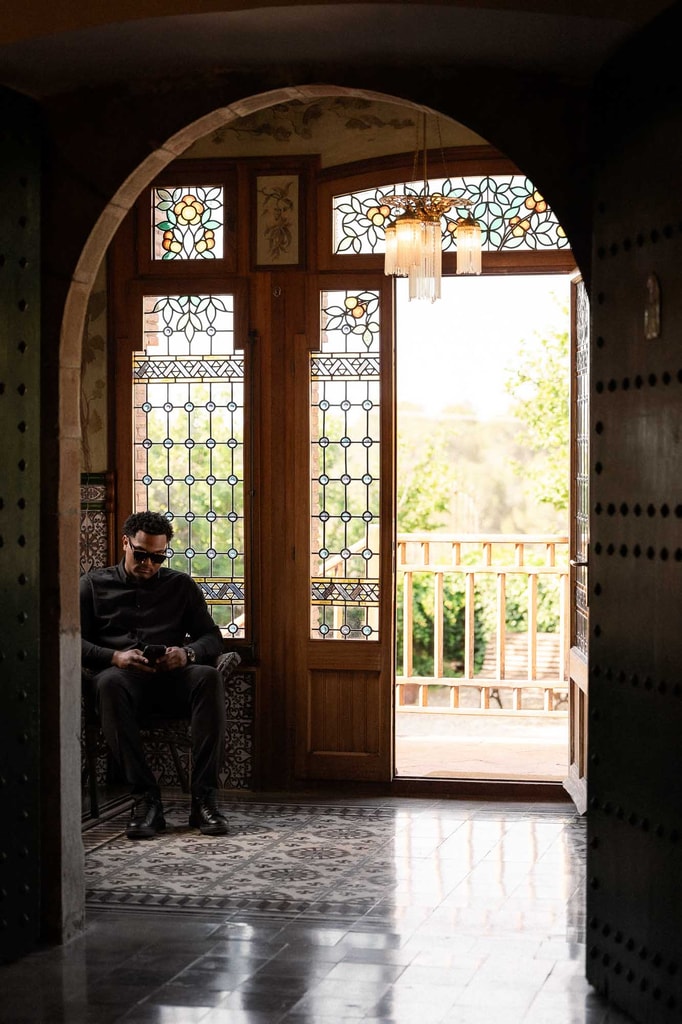
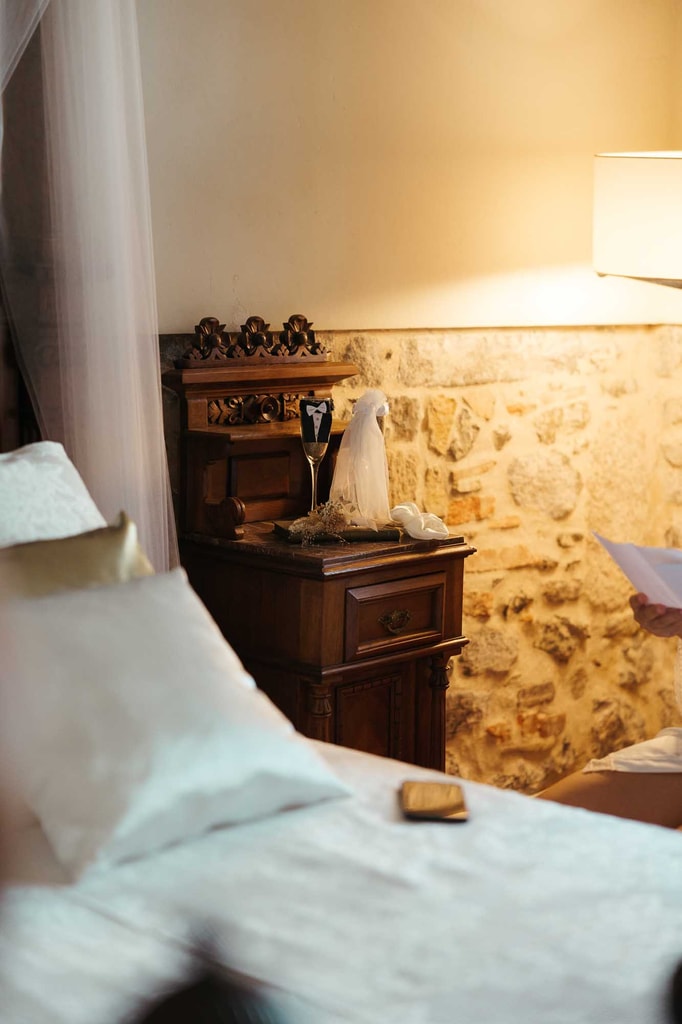
“In a masia the building already gives the background. Our work is to find the hour when the light on the stone is at its best.”

Masia weddings we have photographed
- Mas Palau, Blanes: Edu and Míriam, 27 July 2024. A festive ceremony in the gardens under a floral arch. Gallery and story.
- Masia Montcorp, Montseny: Anna and Bernat, 7 September 2024. A bucolic wedding in a renovated historic house. Gallery and story.
- La Vaqueria de Mas Garriga, Sant Andreu Salou: Mariana and Arnau. A garden ceremony and a party under the wooden beams. Gallery and story.
- Can Borrell, Castellar del Vallès: Mercedes and Jay, 30 May 2024. An intimate destination wedding among brick arches. Gallery and story.
Questions to ask before you book a masia
- How many guests does it hold indoors if it rains, and where does the ceremony move?
- How many people sleep on site, and what is the nearest hotel?
- What is the closing time, and does it change on weekends?
- Do you cook for us, or can we bring a caterer, a planner and a photographer?
- Is it one wedding per day, and how long can we use the grounds?
If you want to compare masias with other types of venue, read our guides to wedding venues on the Costa Brava and to venues near Barcelona. When you have a shortlist, tell us the date and the masias you are considering and we will say how the light works at each.
Planning your wedding?
We would love to hear about your plans. Tell us about your day and let’s talk about how we can photograph it.