Film vs digital wedding photography comes down to look, process and cost, not to quality. Film gives a colour and a texture set by the film stock, softer highlights and some visible grain, and it needs a lab and more time. Digital gives you flexibility in dim light, faster delivery and a very consistent gallery from the first frame to the last dance. You do not have to choose one: many photographers, including us, shoot both.
In this guide
Film vs digital wedding photography at a glance
Neither is better in general. The photographer’s eye, the light and the editing decide the quality of your photographs more than the medium does. This table shows what changes for you as a couple, and the sections below explain each row, with the technical facts and where they come from.
| What changes | Film | Digital |
|---|---|---|
| Look and colour | Set largely by the film stock | Set mostly in editing |
| Bright highlights | Tend to fade out gently | Clip to pure white once the sensor is full |
| Texture | Visible grain, finer on a larger negative | Clean files, noise only at high ISO |
| Low light | Speed fixed for each roll, ISO 400 to 800 is common | ISO changes from frame to frame, far higher |
| Number of frames | 36 per roll in 35 mm, 10 to 16 in medium format | Hundreds per memory card |
| Delivery | After lab development and scanning | Straight from the card to editing |
| Cost | Film, development and scan for every roll | Equipment and editing time |
Look and colour
On film, much of the colour is decided before the wedding, when the photographer chooses a film stock, much as they choose a lens. Kodak describes its Portra 400 as a fine-grain colour negative film at true ISO 400, made for portrait and travel work, with natural skin tones (Kodak data sheet E-4050). A digital camera starts from a neutral file, and the look is built in editing. A skilled editor can bring digital files close to the colour of film, and many do. It is a recreation, not the same process, and the differences show most in bright highlights and in mixed light.
Skin tones deserve a word. Film makers design their portrait stocks around them, and digital cameras and editing also give excellent skin when handled with care. What changes is who makes the decision: the film stock on film, the editor on digital.
Highlights, shadows and exposure latitude
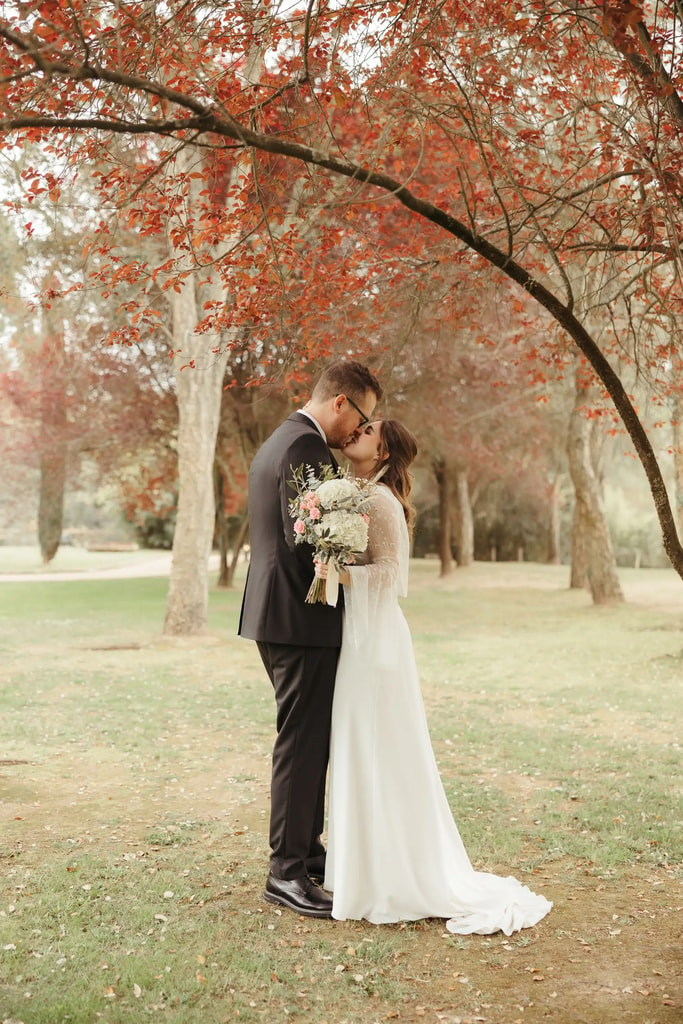
Latitude is the room a photographer has to be wrong. Kodak’s sensitometry guide defines it as the permissible change in camera exposure without significant effect on image quality, and explains that negative film is made with a low-slope response, typically about 0.45 to 0.65, to give more exposure latitude (Kodak H-740). In practice this matters on a sunny wedding day: a white dress in strong light is a hard exposure, and negative film tends to be kind to it.
Be careful with numbers you find online. Kodak’s current Portra data sheets give no figure in stops. Its 2006 launch material for an earlier generation of Portra claimed about two stops under and three stops over (report of the launch). Treat such figures as photographers’ experience, not as a guarantee.
A digital sensor records until it is full. After that point a highlight is pure white and no detail can be recovered. Photographers expose digital to protect the white dress, then lift the shadows in editing, where current sensors hold a lot of detail. Both systems can give good results in strong light. Film makes it easier to give a little extra exposure, digital makes it easier to check the result on the spot.
Grain, medium format and 35 mm
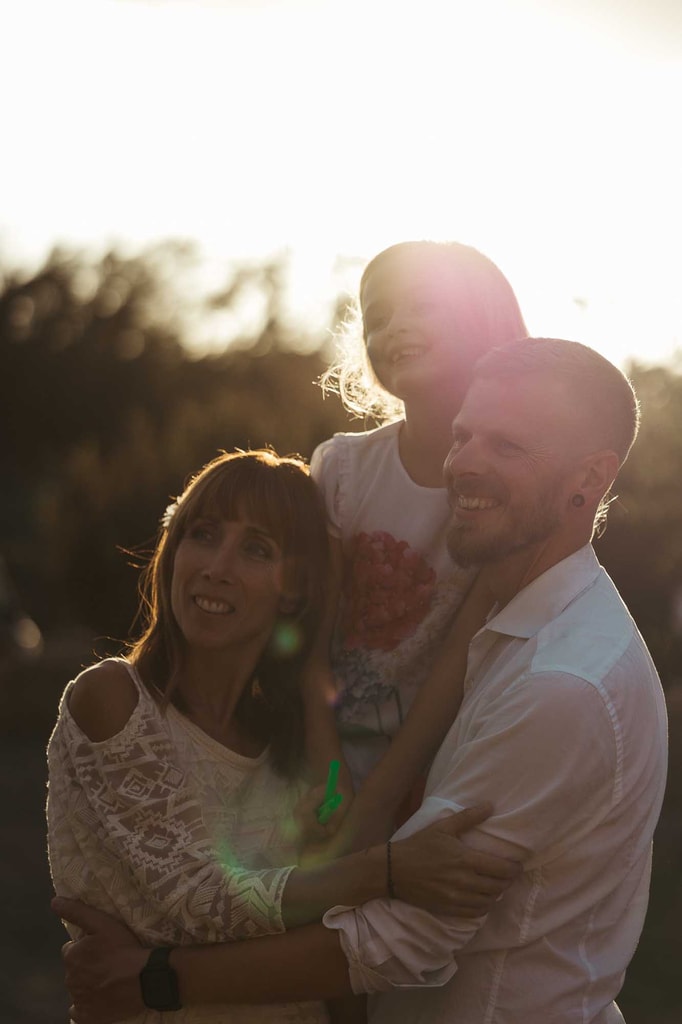
Grain is part of the look of film. How visible it is depends on the film speed, the size of the negative and the size of the print. Kodak’s Portra 400 data sheet rates graininess with a Print Grain Index. For an 8 × 10 inch print it gives 59 for a 35 mm negative and 37 for a 6 × 6 cm medium format negative. A rating of 25 is about the visual threshold, and a change of four units is a just noticeable difference (Kodak data sheet E-4050).
This is the practical reason to use medium format. A 6 × 6 negative measures about 56 × 56 mm, against 24 × 36 mm for 35 mm, roughly 3.6 times the area (120 film). The cost is fewer frames: a 120 roll gives 10 to 16 depending on the format, and a 35 mm roll gives up to 36 (135 film). A full-frame digital sensor has the same 24 × 36 mm size as a 35 mm frame.
Digital files have no grain. They have noise, which appears when the camera is pushed to a high ISO in dim light and is usually reduced in editing. Some couples love grain and others prefer very clean skin, so ask to see complete galleries, not only favourites.
Low light, flash and the party
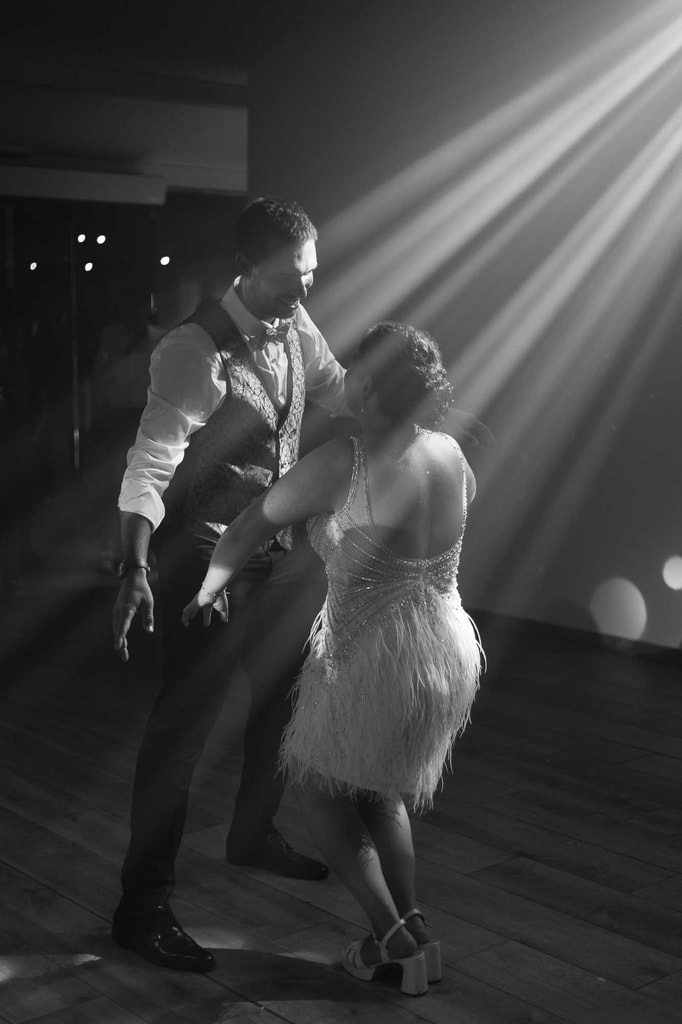
A roll of film is loaded at one speed, so the photographer cannot change the sensitivity between frames. ISO 400 is the common daylight choice. For dim rooms there are faster stocks: Kodak’s Portra 800 is described as ideal for low light, with best-in-class underexposure latitude, and its data sheet includes curves for exposing it at EI 1600 and 3200 (one and two stops of push) (Kodak data sheet E-4040). Digital cameras change ISO from one frame to the next, and current models offer very high values: the Canon EOS R6 Mark II, for example, lists a standard range of ISO 100 to 102,400 (Canon).
Venue lighting is another factor. Under some lamps film needs colour filters and extra exposure: the Portra 400 sheet lists about 2 stops more for warm white fluorescent tubes and about 2 2/3 stops more for high-pressure sodium lamps. A digital camera adjusts its white balance and shows the result immediately. For this reason many photographers shoot dark interiors, speeches and the dance floor on digital, and keep film for moments with good light and a little time.
Number of photos, delivery and the lab
Film is shot more slowly, on purpose. Ten rolls of 35 mm hold at most 360 frames, so a film photographer decides which moments deserve a frame. Digital can record the whole day. Our packages state the number of edited photographs in the gallery: at least 700 with one photographer and at least 1,000 with two (investment).
Film must be developed and scanned before it can be edited digitally. Kodak’s sheet says to process the film as soon as possible after exposure, in the C-41 process for colour negative film. That adds lab time that digital does not have. On our side, you receive some highlights a few days after the wedding, and the full gallery within a few months, in a private online gallery. Ask any photographer how much time film adds to their delivery.
The scan is part of the look. Kodak’s sheet notes that its negatives can be scanned on anything from desktop scanners to high-end drum scanners, and the same negative can come out with different contrast and colour depending on the scanner and on who corrects the file. The lab matters as much as the camera.
If your photographer flies to your destination wedding, ask how the film will travel. Kodak notes in its Portra 800 sheet that fast films are sensitive to radiation, which is cumulative, and suggests asking for a visual inspection at airport security.
Cost for the couple
Film adds a cost for every roll: the film, the development and the scan. Digital has no film or lab cost per frame, but it needs the same careful editing time. This is why film is often a defined part of a package, not the only camera of the day. Our packages with two photographers list analog and digital photography together, and one of them also includes a small box of printed analog photographs (see the packages). Ask how many rolls are included and what happens if more are needed.
How photographers combine film and digital
Most hybrid photographers use each tool for what it does best. Digital covers the fast, dark and unpredictable parts of the day. Film is kept for chosen moments: portraits, details, the quiet minutes between the ceremony and the party. Because scanned negatives are digital files, film and digital frames can be edited to match and sit in one gallery.
“Film chooses the look when the light is good. Digital protects the moments when it is not.”

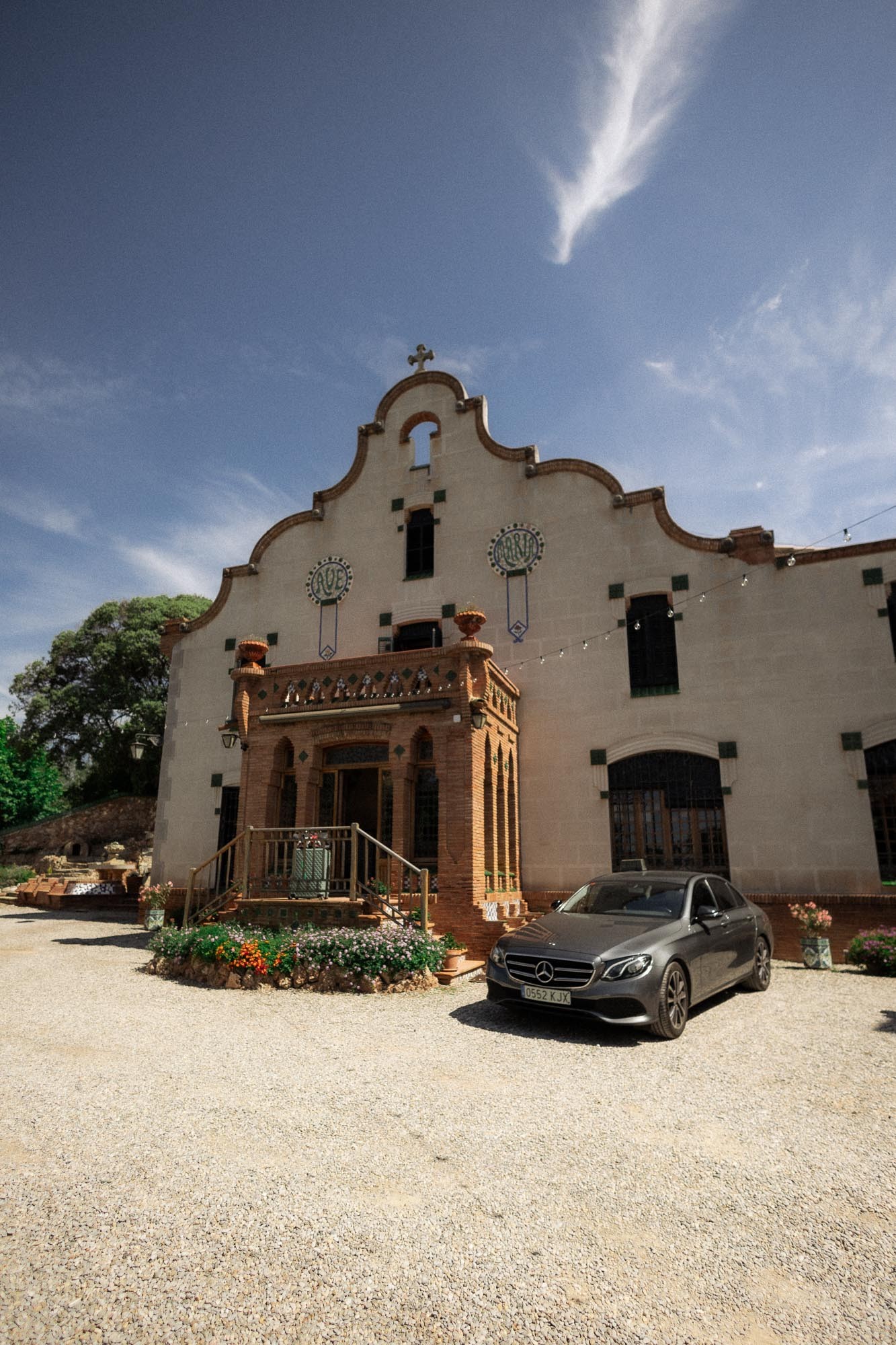
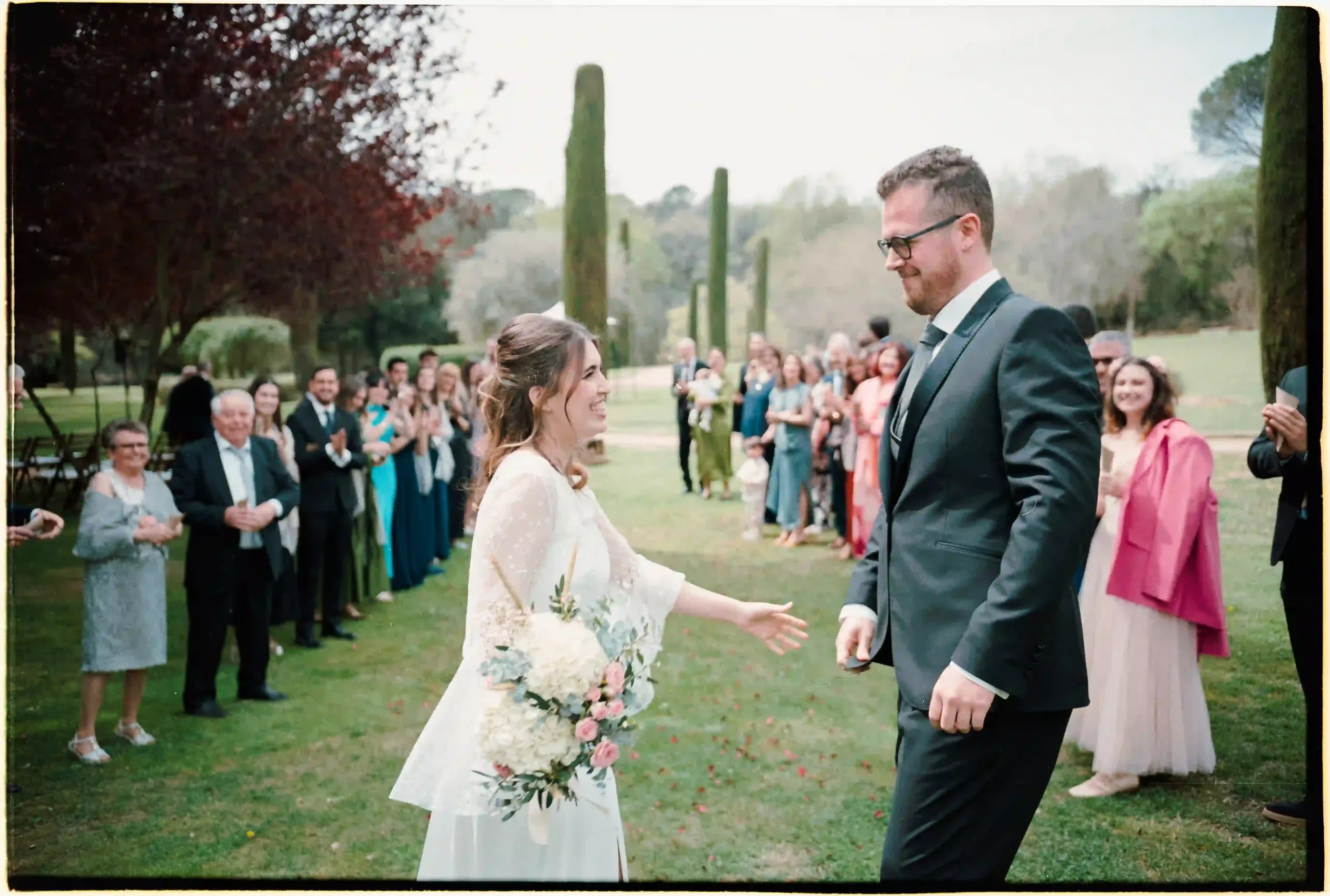
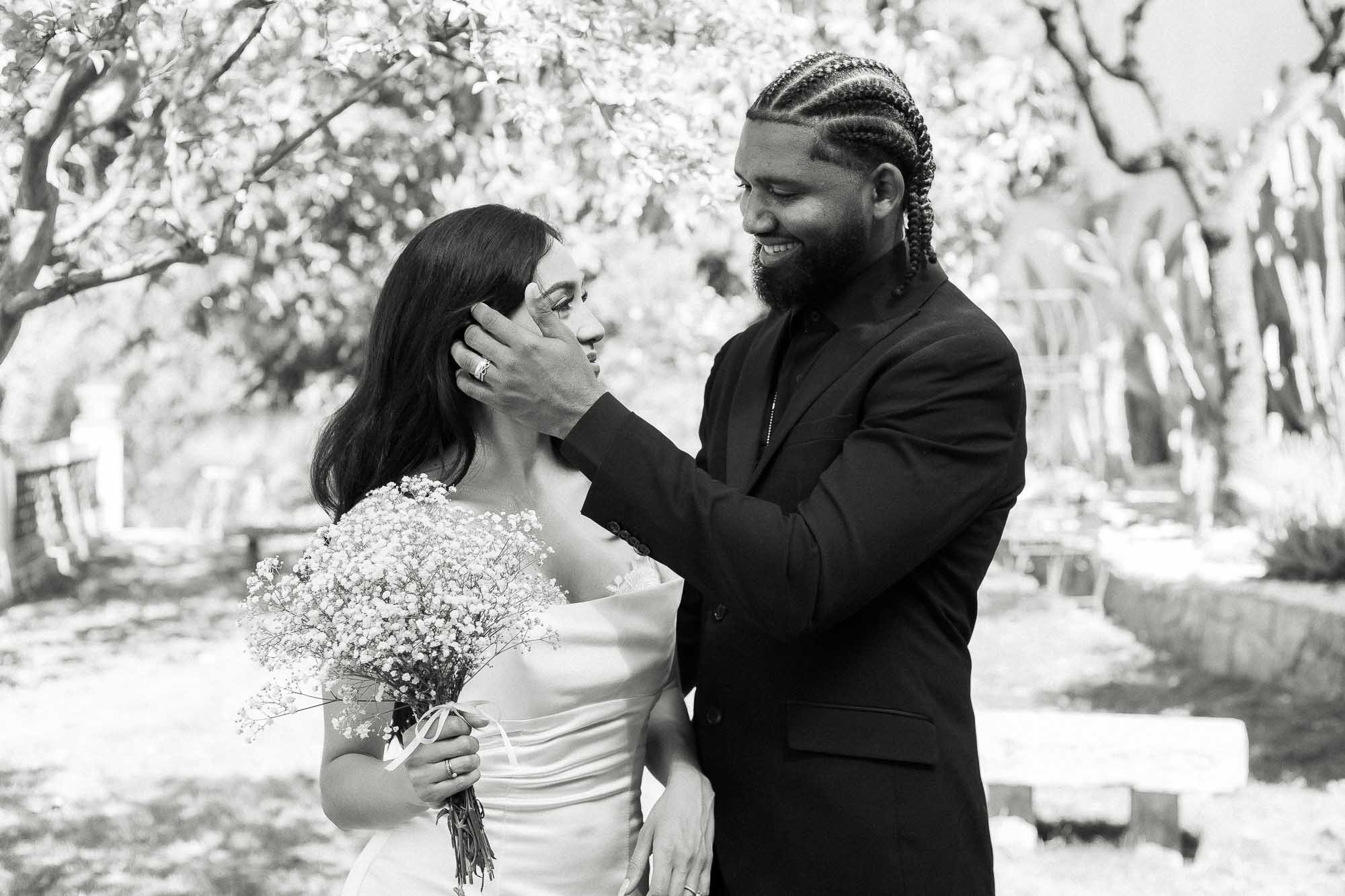
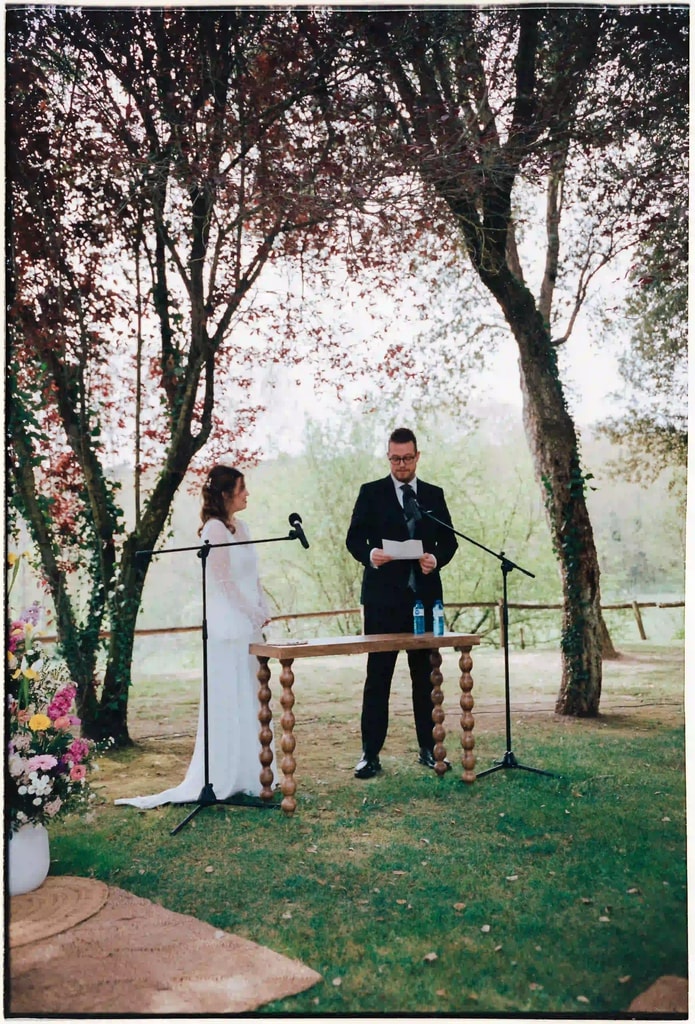
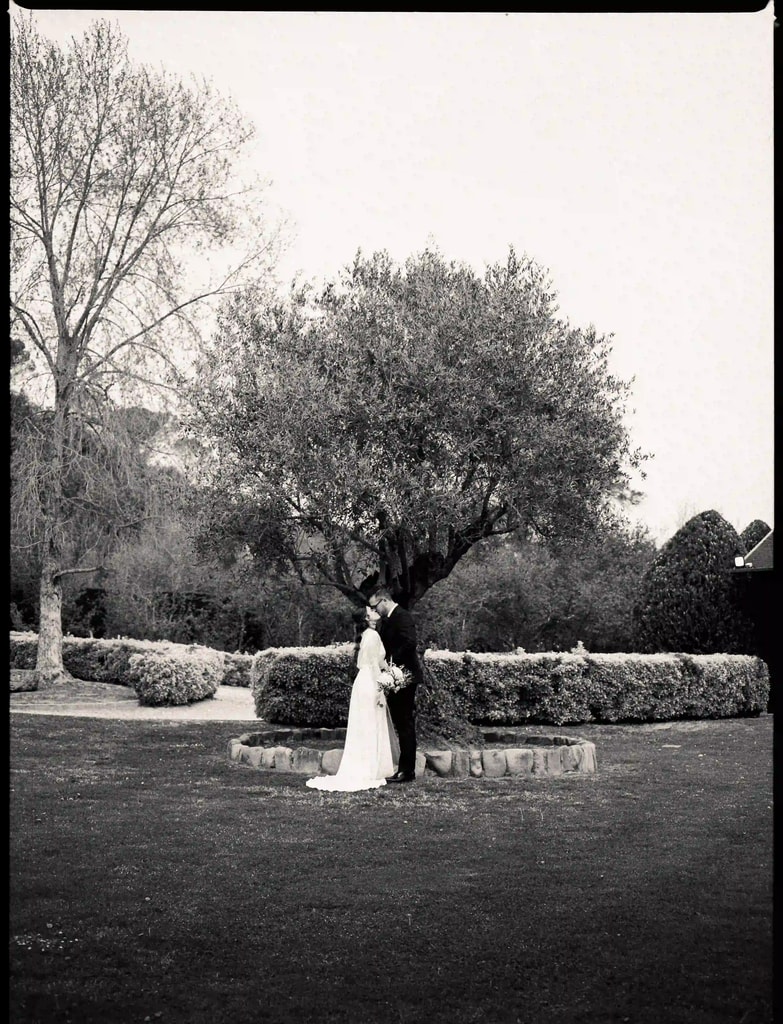
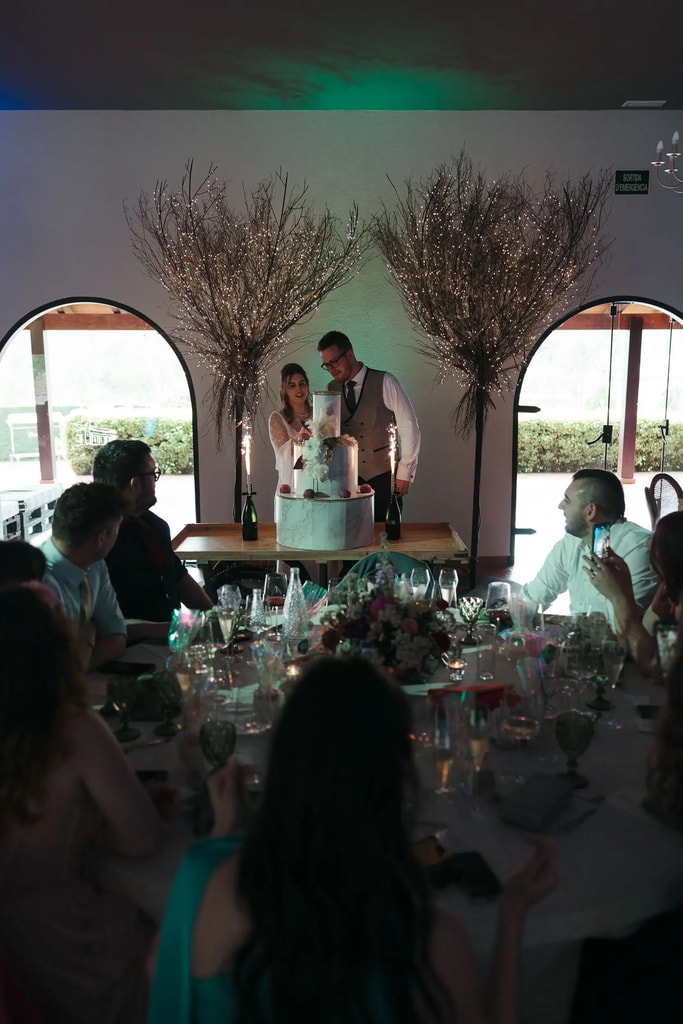
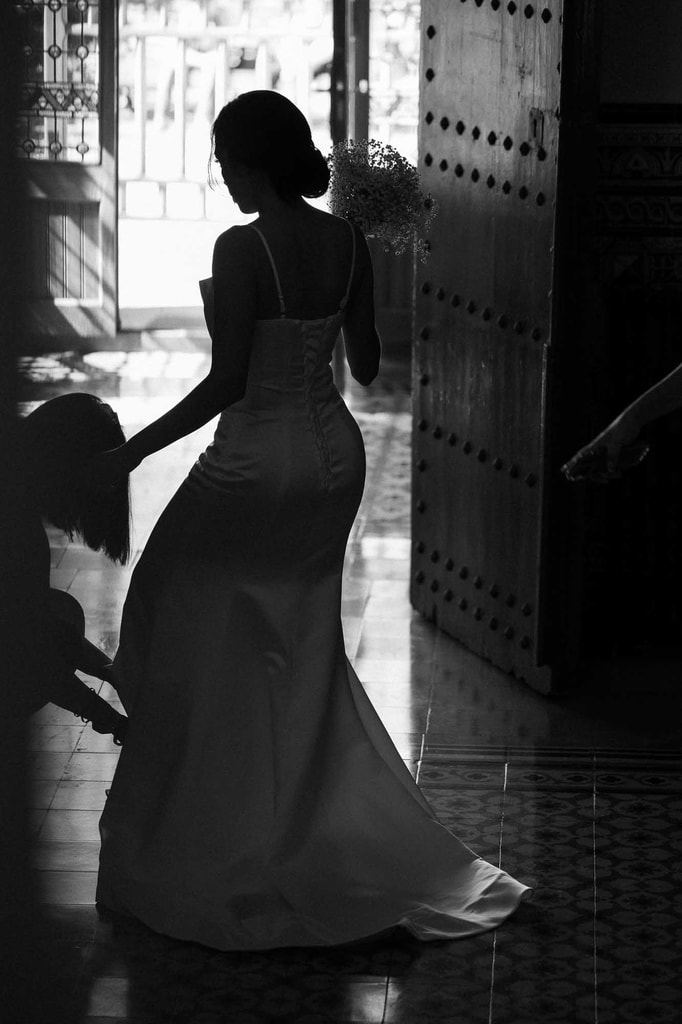
We describe our own work in general terms. Our homepage says digital for every moment and film for special moments, and our FAQ says one of us shoots film alongside digital in the two-photographer packages. The exact balance depends on the day, the light and the venue. You can read more about us on our about page and see the results in our portfolio. The photographs here come from our weddings. Some are black and white or have a film-style look, and this guide does not mark which frames were shot on film.
Questions to ask your photographer
- Which moments of the day will be shot on film, and which on digital?
- How many rolls are included, and what happens if more are needed?
- Which lab develops and scans the film, and how long does it take?
- Can we see a complete gallery from a wedding with the same mix of film and digital?
- How will the film travel if the wedding is abroad?
- What is the backup plan if a roll is damaged?
Our guide to choosing a wedding photographer in Barcelona has more questions to ask. If you would like to talk about how film and digital could work at your wedding, tell us about your plans.
Planning your wedding?
We would love to hear about your plans. Tell us about your day and let’s talk about how we can photograph it.