Wedding family and group photos go smoothly when you decide the list in advance, give one person the job of gathering people, and do them in one short block right after the ceremony. Most couples need between eight and fifteen groups, and the whole block usually takes 20 to 40 minutes. This guide gives you a template list, realistic timings and ways to handle the harder situations, from divorced parents to a great-grandmother who cannot stand for long.
How many family and group photos do you need?
Between eight and fifteen groups is a comfortable range for most weddings. Every extra group means more time, more people to find and more guests waiting without a drink in their hand. A shorter list gives better photographs too, because the people in them are still smiling.
| Groups | Rough time | Good for |
|---|---|---|
| 5 to 8 | 15 to 20 minutes | Small weddings and elopements |
| 9 to 15 | 25 to 40 minutes | Most weddings |
| 16 or more | 45 minutes or longer | Very large families, ideally with some groups moved to the drinks reception |
These are general ranges. Once everyone is in place, a group takes two to three minutes. The time goes into finding people, so the helper you choose (see below) matters as much as the number of groups. Mark each group on your list as essential or only if there is time, and the photographer can drop the second kind when the day runs late.
A template list for wedding group photos
Order the list from the largest group to the smallest. The big groups come first so that most guests can leave for the drinks, and the last groups only need a handful of people. Change the relationships to fit your families.
- All the guests. One frame with everyone, ideally from a height (more on this below). Do it first so the guests can go.
- The couple with the whole family of one partner. Parents, siblings, grandparents, aunts, uncles and cousins.
- The couple with the whole family of the other partner. The same group, on the other side.
- The couple with the parents of one partner, plus their siblings.
- The couple with the parents of the other partner, plus their siblings.
- The couple with both sets of parents together. Skip it or adapt it if the families are delicate (see the section on divorced and blended families).
- The couple with the grandparents. Do this one early, before anyone gets tired.
- The couple with siblings, their partners and their children. Nieces and nephews belong here.
- The couple with the wedding party. Bridesmaids, groomsmen, best man, maid of honour, or whatever your group is called.
- The couple with the witnesses and, if you have them, the godparents.
- The couple with groups of friends. School friends, university friends, colleagues, the football team. Each takes about a minute, so write the groups down in advance.
- The couple with the children. Flower girls, ring bearers, cousins. Do them early, before they lose interest.
- Each partner with their own parents. Two quick pairs, often the most treasured photographs on the list.
- Optional: the couple with the celebrant and anyone who read or played during the ceremony.
Add one line to every group with names and relationships, for example “the groom’s mother and her two sisters”. The photographer does not know your families, and a vague list is the main cause of delays.
Who should be in charge
Give the job to one person, or two, who know both families by sight. A sibling, a cousin or a close friend works well. It should not be you, because you have to be in the photographs, and usually not your parents either, because they are in them too.
Send the list to the photographer a few days before the wedding. A simple table is enough: the group number, who is in it and who can find them. The two jobs are different and both are needed: the photographer builds the frame, the helper brings the people. During the shoot the helper calls the next group by name, loudly, while the photographer finishes the current one.
Tell the family early. A line on your wedding website or a message the day before is enough: after the ceremony there will be family photographs, so please stay close to the ceremony space. People who know the plan do not disappear towards the bar.
Where and when to do them
The best moment is right after the ceremony and before the drinks reception. Everyone is there, dressed and relaxed, and nobody has wandered off. While your guests enjoy the aperitif, you can go on to your couple portraits.
For the place, think of light and walking distance:
- Close to the ceremony space, so nobody has to walk far, especially elderly guests.
- Open shade, such as the shadow of a building, trees or a covered porch. Faces are even and nobody squints. In the Barcelona and Costa Brava summer, direct afternoon sun is strong, so a shaded corner is worth finding.
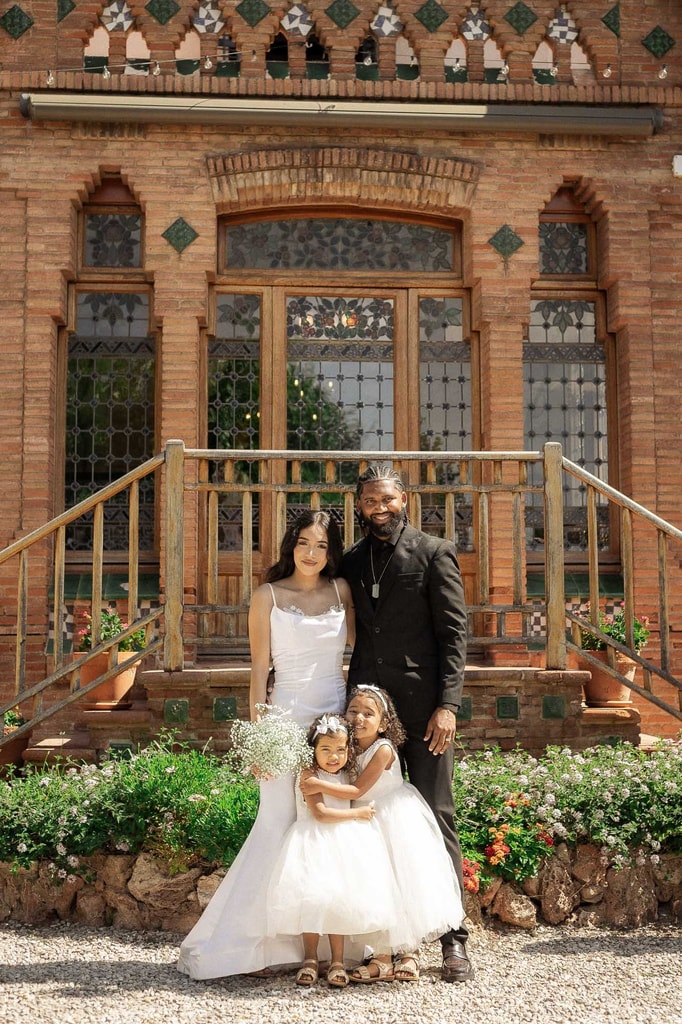
- A simple background. A wall, a hedge or a garden. Steps are useful for large groups.
- A plan for rain or heat. A covered space or a room inside, and water for the older guests.
Visit the spot with the photographer beforehand, or ask the venue which places are free at that hour. If the ceremony is in the evening, ask the photographer about the light at that time of year and check the details close to your date, because the sun moves through the season.
Children and elderly relatives
Children
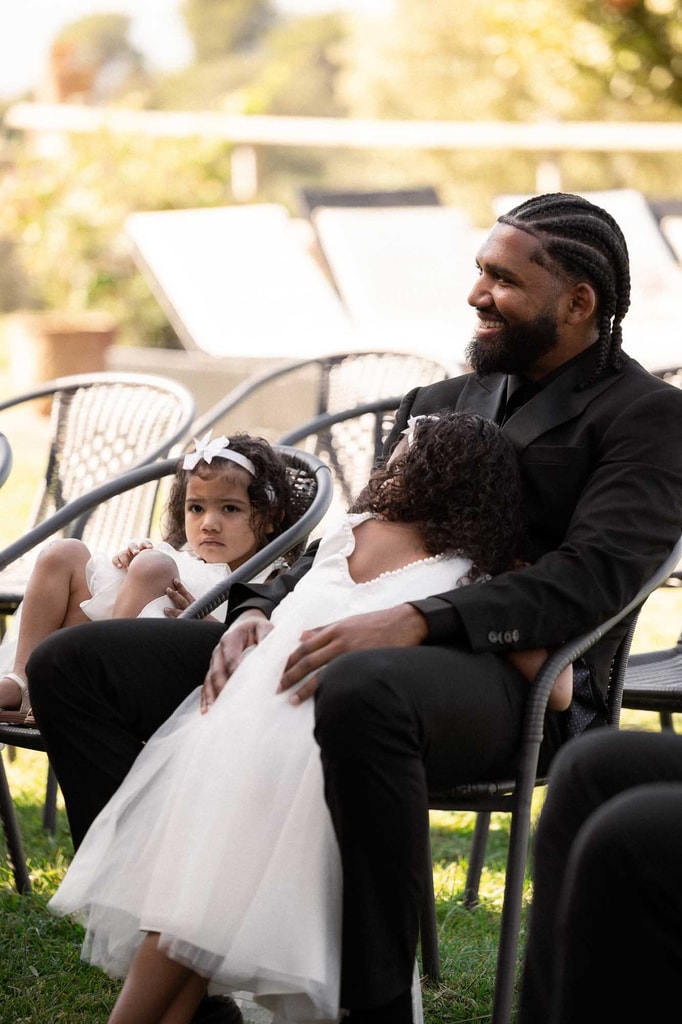
Children have a short patience for groups. Put the groups that include them near the start of the list, keep them short, and then let them go and play. The photographer will get down to their level, and a parent calling from behind the camera helps. A child who looks away is not a failed photograph. It is often the most honest one.
Elderly relatives
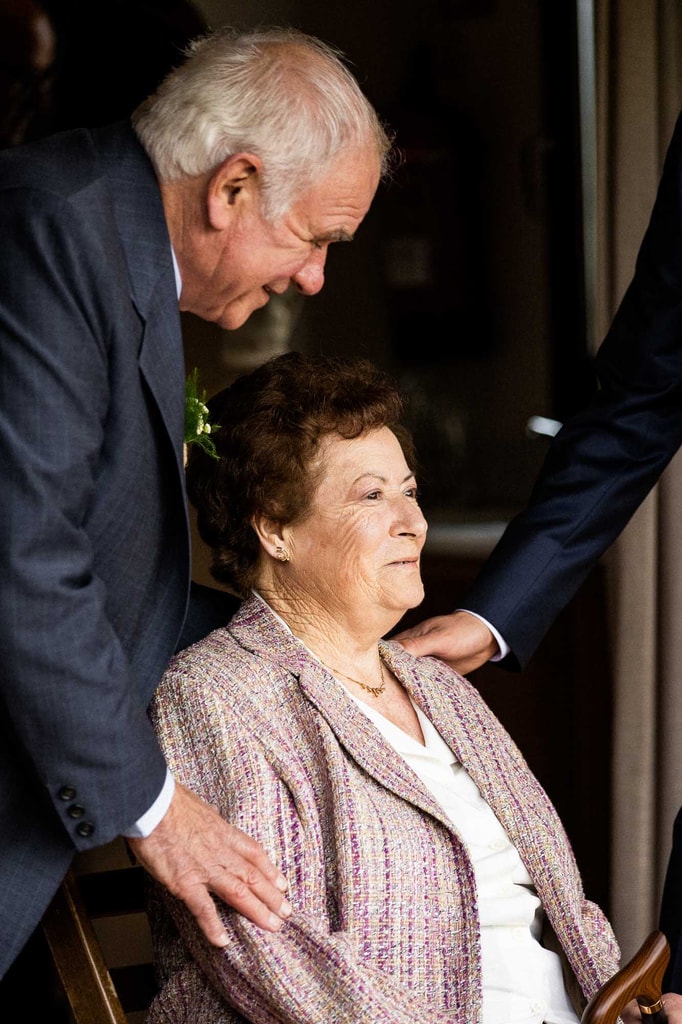
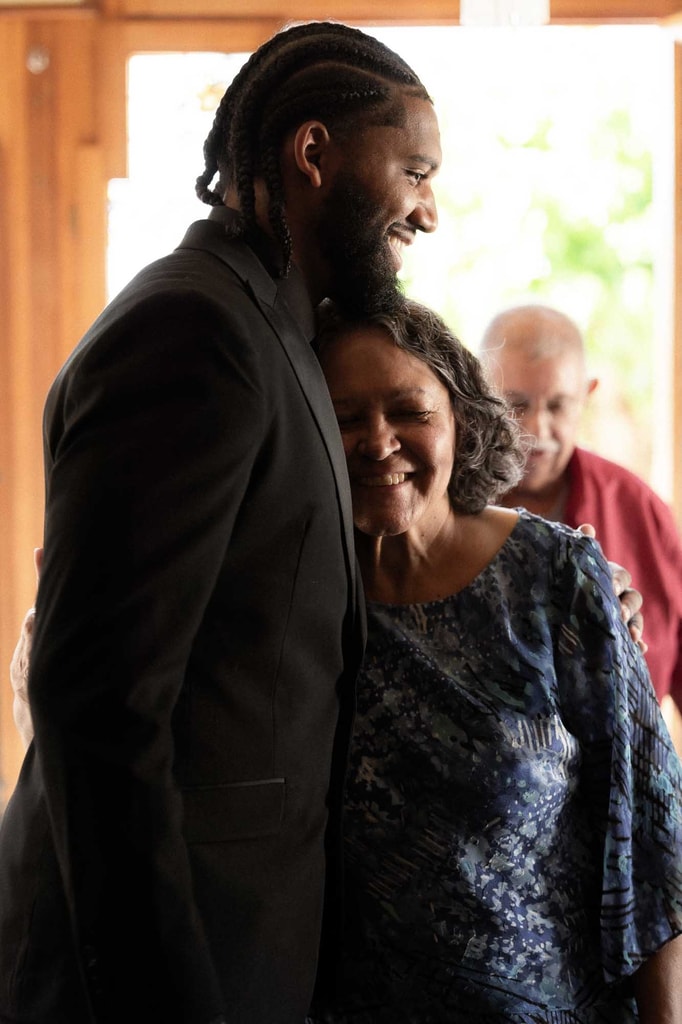
Do the groups with grandparents and older relatives early so they can sit down in the shade afterwards. Bring a chair and make them the centre of the frame, with the others standing around them. Check the ground, because gravel and grass are hard for walking sticks and walkers. Ask a family member to stay with each person who needs help, and avoid making anyone wait in the sun.
Divorced and blended families
Talk about it before the wedding, not on the day. Ask each parent, quietly, what they would like. Many people are fine with a group photograph, some prefer not to stand next to a former partner, and it is easier to know this in advance.
The list is the solution. Instead of one group with everybody, make separate groups: the couple with one parent and their partner, then the couple with the other parent and their partner, then the couple with each parent alone. Nobody has to stand where they are uncomfortable, and every parent gets a photograph that is fully theirs.
- Stepparents and stepsiblings. Ask them whether they want to be in the group, and offer both versions: the couple with the parents, and the couple with the parents and their partners.
- Half-siblings and new babies. Put them in the sibling group, so the whole family is there.
- Someone who has died. If the family wants a place for them, a framed photograph or a flower can be in the frame. If not, leave it.
- Tell the photographer privately who should not stand next to whom. Nobody needs to announce it to the list.
Large group photos from a height
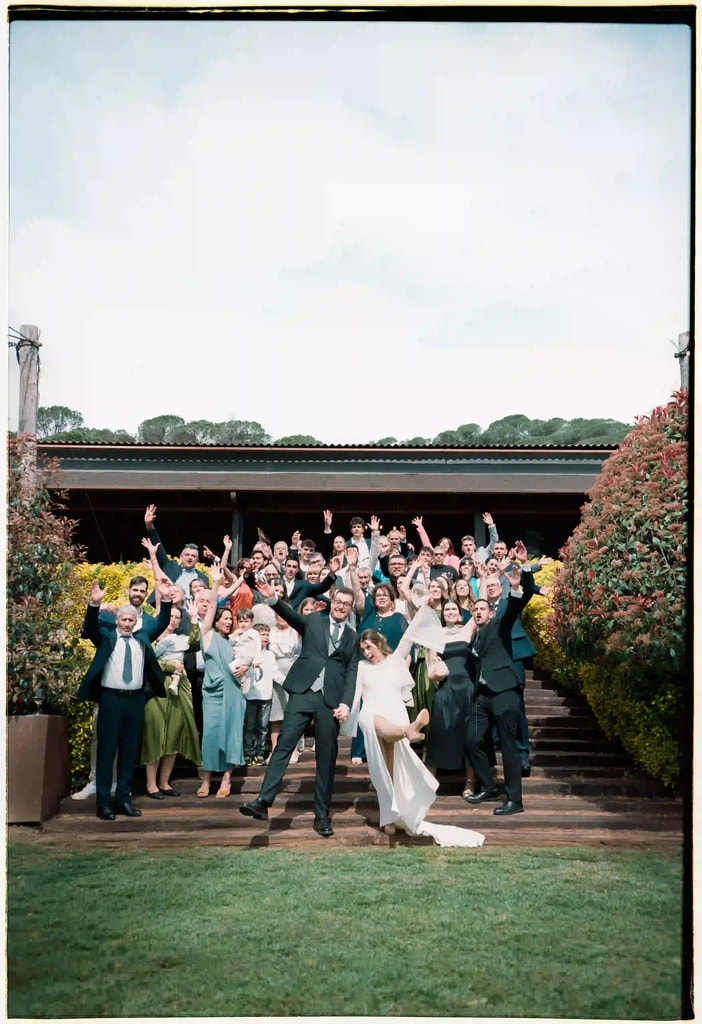
For the photograph of all the guests, height helps. People at the back are not hidden behind the people at the front, and every face is visible. Look for a staircase, a terrace, a balcony or a low wall. Ask your photographer whether they bring a small step ladder.
Ask the guests to stand close together, in two or three rows, and to look at the photographer. Take a serious version, then a second one where everyone cheers or throws their arms in the air. The second one is often the one people remember. Give this photograph about five minutes, including the time to gather people.
Candid alternatives to formal groups
Formal groups are useful, but they are not the only family photographs you will have. A shorter list works well when the photographer also makes candid photographs of the same people through the day.
- The greetings after the ceremony. As guests come to congratulate you, every family group passes in front of the photographer, hugging and laughing.
- The drinks reception. The photographer moves between groups of friends and family while you talk to them.
- The tables at dinner. A quick photograph of each table, with everyone at their place.
- Your own list of people. Tell the photographer five people you want candid photographs of, such as your grandmother laughing or your father dancing.
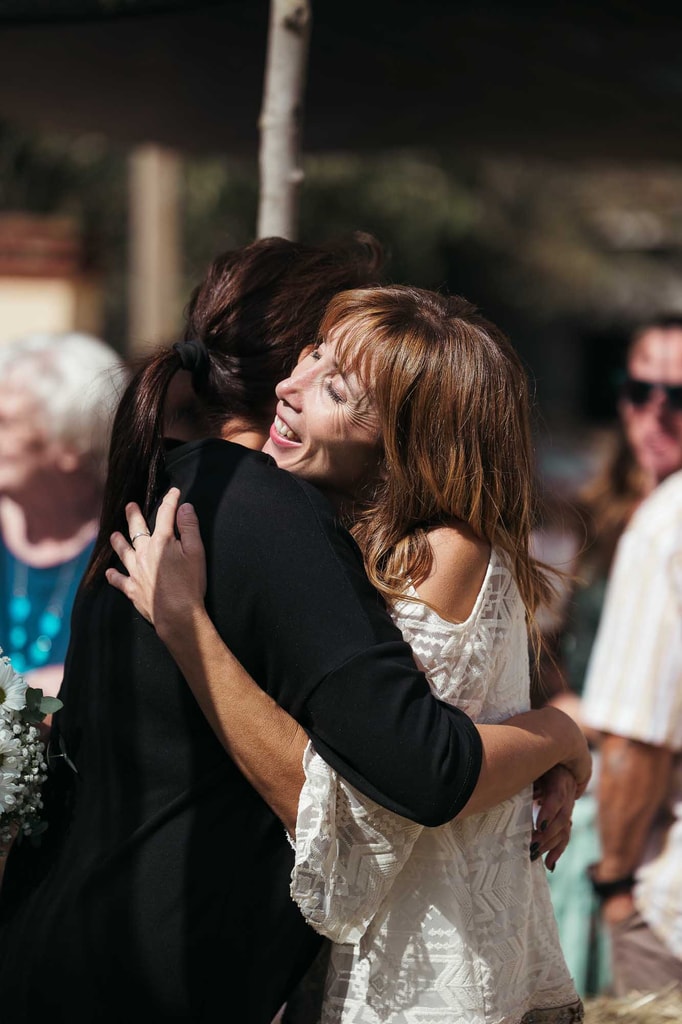
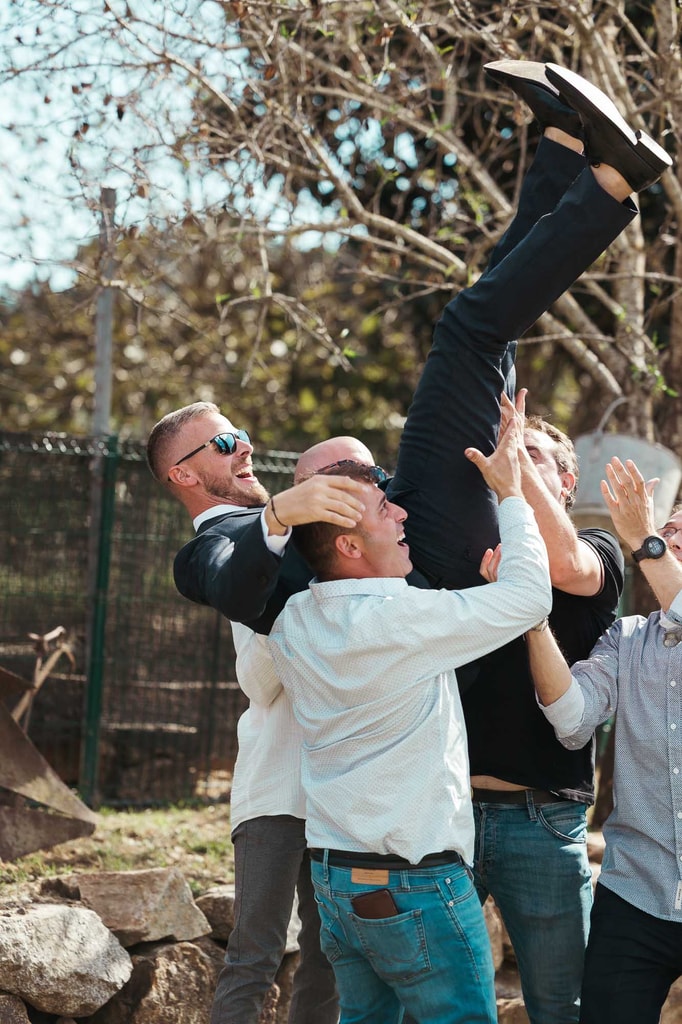
A short formal list plus candid family moments through the day usually gives you the best of both.
A short plan to follow
- Write the list, from the largest group to the smallest, with names and relationships.
- Mark each group as essential or only if there is time.
- Choose one or two helpers who know both families.
- Send the list to the photographer a few days before.
- Choose a place in open shade and a plan for rain.
- Leave 30 to 40 minutes between the ceremony and the drinks reception.
- Tell your guests to stay close after the ceremony.
We are Martí and Paula, two photographers who photograph weddings in Barcelona and across Catalonia. If you would like help planning the family photographs for your day, you can write to us on the contact page. You will find more planning advice in our guide to planning a wedding in Barcelona and in how to choose your wedding photographer, and you can see complete days on the real weddings page, for example Emma and Sergi at El Jardí de Calders.
Planning your wedding?
We would love to hear about your plans. Tell us about your day and let’s talk about how we can photograph it.